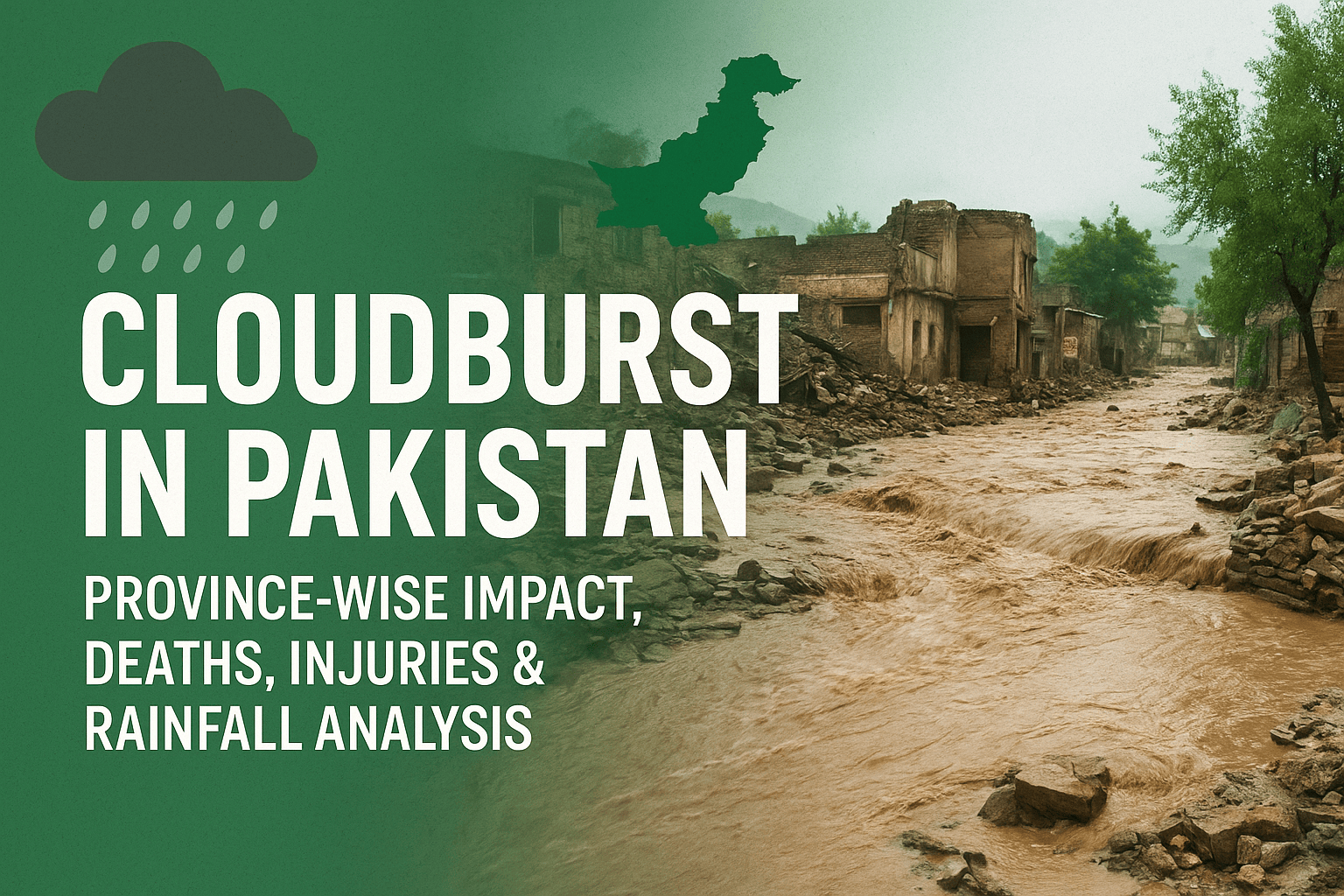
Natural disasters like cloudbursts have become increasingly frequent in Pakistan, leaving behind trails of destruction. The sudden and intense rainfall not only damages infrastructure but also causes significant human loss.
Natural disasters like cloudbursts have become increasingly frequent in Pakistan, leaving behind trails of destruction. The sudden and intense rainfall not only damages infrastructure but also causes significant human loss. This article provides a detailed province-wise analysis of cloudburst impacts in Pakistan, focusing on deaths, injuries, and rainfall patterns, along with recommendations for disaster preparedness.
What is a Cloudburst?
A cloudburst is an extreme amount of rainfall over a short period of time, often leading to flash floods. In mountainous and densely populated areas, cloudbursts can be catastrophic washing away homes, roads, and lives within hours.
Province-Wise Impact of Cloudbursts in Pakistan
1. Khyber Pakhtunkhwa (KP)
- Highest fatalities and injuries among all provinces.
- Mountainous terrain makes valleys highly prone to flash floods.
- Rainfall intensity directly linked with both deaths and injuries.
- Key Concern: Lack of early warning systems and flood protection in valleys.
- Recommendation: Install localized weather radars, strengthen flood barriers, and train communities in emergency response.
2. Punjab
- Deaths relatively lower compared to KP and Balochistan.
- Second-highest injuries, showing survivors often face serious medical needs.
- Urban flooding in low-lying cities worsens the impact.
- Key Concern: Emergency health systems overwhelmed during heavy rains.
- Recommendation: Improve drainage systems and establish emergency medical camps in vulnerable cities.
3. Balochistan
- High fatality rate despite lower overall cases.
- Flash floods in arid zones prove more deadly than injurious.
- Poor infrastructure increases vulnerability during intense rainfall.
- Key Concern: Lack of protective housing and safe evacuation routes.
- Recommendation: Build rainwater diversion channels, strengthen housing structures, and prepare early evacuation plans.
4. Sindh
- Lowest fatalities and injuries compared to other provinces.
- Still faces urban flooding, especially in Karachi and Indus riverbank regions.
- Key Concern: Vulnerability of densely populated cities.
- Recommendation: Enhance urban flood management and improve stormwater drainage in Karachi.
5. Gilgit-Baltistan (GB) & Azad Jammu Kashmir (AJK)
- Smaller populations but high per-capita risk.
- Cloudbursts often cause landslides and road blockages, isolating communities.
- Key Concern: Road connectivity and emergency response delays.
- Recommendation: Deploy landslide monitoring systems and establish rapid road-clearing units.
Comparative Insights
- KP: Most vulnerable province ? high deaths & injuries.
- Punjab: More injuries than deaths ? urgent need for medical preparedness.
- Balochistan: Cloudbursts are deadlier ? protective infrastructure required.
- Sindh: Least affected but urban areas at risk ? flood planning essential.
- GB & AJK: Smaller numbers, but dangerous terrain-driven disasters.
Preparing for Future Cloudbursts
The analysis makes one fact clear: rainfall intensity strongly correlates with deaths and injuries in Pakistan.
- KP and Balochistan remain the most critical hotspots.
- Punjab and Sindh need urban-focused flood management.
- GB and AJK must prioritize landslide and connectivity solutions.
With climate change intensifying rainfall patterns, Pakistan must invest in early warning systems, disaster-resilient infrastructure, and medical preparedness to minimize human and economic losses.
View Analysis In Jypyter Notebook